1. Introduction
As the cannabis industry continues to grow, so does the variety of products available to consumers. Among the most talked-about are cannabis extracts and concentrates, two terms often used interchangeably, but which actually describe different types of cannabis preparations. Understanding how each is made and what sets them apart can help you choose the product that best suits your needs, whether you’re seeking flavour, potency, purity, or convenience.
2. What Are Cannabis Concentrates?
Cannabis concentrates are products made by isolating and collecting the most desirable parts of the cannabis plant, primarily cannabinoids (THC, CBD) and terpenes, while removing excess plant material.
They can be produced through mechanical or physical means, without the use of chemical solvents.
Common Types of Concentrates:
- Kief: Loose trichomes collected from dried flower.
- Hash: Compressed kief, often made through heat or pressure.
- Rosin: Created by pressing flower or hash using heat and pressure.
- Wax, Shatter, Budder: Although often categorized under extracts, these can also be made in solventless forms, depending on technique.
Concentrates are valued for their natural flavour, clean profile, and traditional methods of production.
3. What Are Cannabis Extracts?
Cannabis extracts are a type of concentrate, but they’re specifically created using chemical solvents such as CO₂, butane, propane, or ethanol. These solvents help pull cannabinoids and terpenes away from the plant more efficiently and with higher purity.
Common Types of Extracts:
- THC Oil: Often used in vape cartridges.
- Distillate: Ultra-refined THC or CBD with very high potency.
- Live Resin: Made from fresh frozen cannabis to preserve fragrance and flavour.
- Crumble: A textured extract with high cannabinoid concentration.
Why Extracts Are Considered More Refined:
Solvent-based extraction methods allow manufacturers to separate cannabinoids with precision, leading to products that are extremely pure, potent, and consistent. The process can also remove waxes, fats, and chlorophyll, resulting in a cleaner finish.
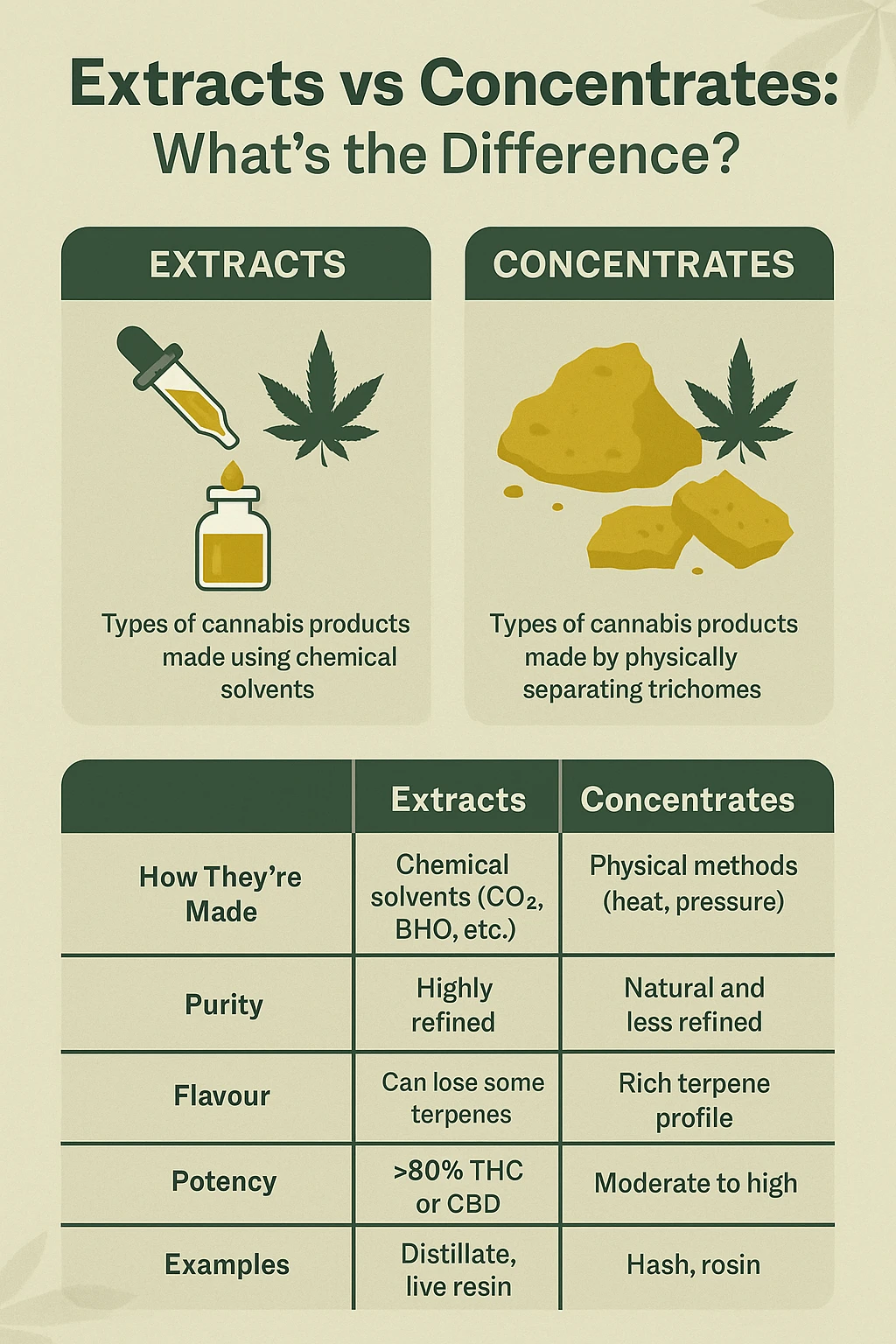
4. The Key Differences Between Extracts and Concentrates
Although extracts and concentrates share similarities, the distinctions matter, especially for consumers looking for a specific outcome.
Read More: Best Cannabis Strains
5. Pros and Cons of Each
Concentrates
Pros:
- Solvent-free and natural
- Full, rich flavour profiles
- Ideal for traditional methods like rosin pressing and hash making
Cons:
- Less refined, may include plant particles
- Potency varies depending on technique
Extracts
Pros:
- Extremely potent and pure
- Versatile—used in vape carts, edibles, tinctures, topicals
- Consistent and predictable effects
Cons:
- Some extraction methods may reduce terpene levels
- Requires advanced equipment and expertise to produce safely
6. How to Choose Between Extracts and Concentrates
Choosing the right product depends on your goals, preferences, and experience level.
Consider Your Usage Method
- Vaping: Extracts like distillate and CO₂ oil are ideal.
- Dabbing: Live resin, shatter, or solventless rosin.
- Edibles: Distillate is most common for its neutral flavour.
Potency Vs. Flavour
- If you prefer the purest expression of the plant, choose concentrates like rosin or hash.
- If you want high potency and consistent effects, extracts are the better choice.
Beginner Tips
- Start with lower-THC concentrates or mild extracts.
- Avoid strong dabs until you understand your tolerance.
- Always purchase lab-tested, compliant products from licensed retailers.
Safety Considerations
Look for:
- Third-party test results
- Clear labelling and cannabinoid levels
- Products free from contaminants or residual solvents
7. Final Thoughts
Both cannabis extracts and concentrates offer unique benefits, and neither is inherently “better” than the other. It all comes down to your desired experience. If you cherish flavour and natural production, concentrates may be your go-to. If potency, purity, and versatility matter most, extracts provide an exceptional, modern option.
As the Canadian market continues to evolve, consumers have more choice than ever, making it the perfect time to explore and discover what works best for your lifestyle.