1. Introduction
Pest control is one of the most important aspects of successful cannabis cultivation. Even small infestations can spread quickly, weaken plant health, and compromise yields. Because cannabis is often inhaled or consumed, choosing safe and residue-free pest control products is essential, not only for plant health, but also for consumer safety.
Whether you’re growing indoors, outdoors, or in a greenhouse, having the right tools and strategies in place can make the difference between a thriving crop and a compromised harvest.
2. Common Pests & Problems in Cannabis Cultivation
Cannabis plants are highly attractive to a range of pests and pathogens. Understanding the type of pest you’re dealing with helps determine the right control method and timing.
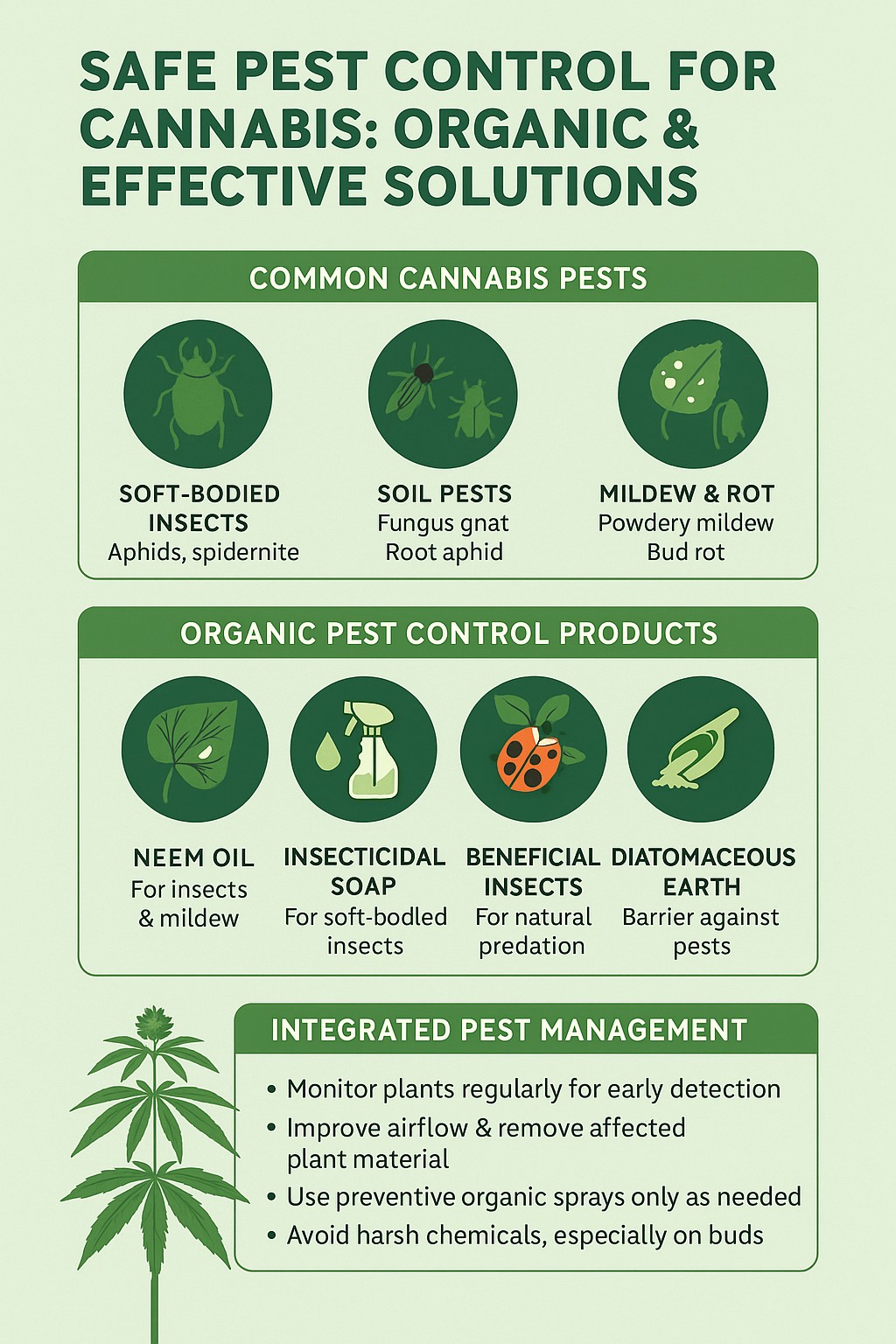
Soft-bodied insects
- Aphids – feed on sap and weaken new growth
- Spider mites – cause stippling, webbing, and leaf decline
- Thrips – create silver streaks on leaves and transmit viruses
Soil-borne pests
- Fungus gnats – larvae damage roots in wet soil
- Root aphids – difficult to detect and capable of severe root damage
Fungal and mildew issues
- Powdery mildew (PM) – spreads quickly in poor airflow
- Bud rot (botrytis) – destroys flowers from the inside out
Each type of pest requires its own control strategy, and certain products are only safe during early growth or vegetative stages. Timing matters just as much as product selection.
Read More: Female and Male Cannabis Plants
3. Principles of Safe Pest Control for Cannabis
Cannabis demands a more cautious approach to pest control compared to many other crops.
Avoid harmful residues
Because cannabis is inhaled or ingested, anything sprayed on the plant may end up in the final product. Residues from harsh pesticides can pose health risks, especially during flowering.
Use Integrated Pest Management (IPM)
IPM reduces pest pressure using multiple strategies:
- Regular monitoring
- Sanitation and airflow improvements
- Preventive sprays
- Biological controls
- Correct environmental adjustments
This approach reduces the need for strong chemicals and keeps the crop healthier overall.
Stay compliant
Health Canada regulates which pest control products are approved for cannabis cultivation. Using unapproved sprays can risk compliance issues, recalls, or failed testing.
4. Organic & Natural Pest Control Products
Organic and natural pest solutions are preferred in the cannabis industry due to their low toxicity, minimal residue, and effectiveness when used correctly.
Neem Oil
A staple in early-stage IPM programs.
- Works against aphids, mites, and fungal spores
- Best used during vegetative growth
- Avoid using on flowers due to strong odour and potential residue
Insecticidal Soaps & Horticultural Oils
Effective against soft-bodied insects.
- Break down quickly and leave minimal residue
- Require full leaf coverage for best results
- Safe for vegetative and, in some cases, early flowering stages
Beneficial Organisms (Biocontrols)
Living predators that hunt pests naturally.
- Predatory mites for spider mites and thrips
- Nematodes for fungus gnat larvae and other soil pests
- Ideal for chemical-free, residue-free control
Mineral or Physical Barriers
- Diatomaceous earth (DE) cuts soft-bodied pests on contact
- Kaolin clay spray creates a protective film on leaf surfaces
These options work best as preventative measures rather than stand-alone treatments.
5. Product Selection & Usage Guidelines
Choosing the right product means matching your pest issue to the plant’s growth stage.
Match product to pest type
- Soft-bodied insects → soaps, oils, neem, predatory mites
- Soil pests → nematodes, DE, drydown techniques
- Fungal issues → sulphur (veg only), organic fungicides, airflow adjustments
Be cautious in flowering
Strong-smelling oils and heavy sprays can ruin terpene profiles or remain trapped in buds. Avoid anything that leaves residue or poses inhalation concerns.
Application best practices
- Spray during lights-off or early morning
- Ensure full coverage, including undersides of leaves
- Avoid spraying beneficial insects
- Rotate products to prevent resistance
What to avoid
- Systemic pesticides – absorbed into plant tissue and unsafe for cannabis
- Unapproved chemicals – risk of testing failure and non-compliance
- High-residue or heavy oil products in late flower
6. Case Examples / Recommended Product Types
Below are categories, not specific brands, to ensure compliance and broad applicability.
- Neem oil formulations (cold-pressed neem + emulsifier)
- Horticultural oil sprays (canola, mineral oil blends)
- Insecticidal soaps (potassium salts of fatty acids)
- Beneficial nematodes for soil larvae
- Predatory mites (e.g., Amblyseius cucumeris, Phytoseiulus persimilis)
These options support proactive and reactive pest control across multiple grow environments.
7. Preventive & Cultural Practices to Complement Products
A strong IPM program relies on environmental management just as much as sprays or biocontrols.
Key preventive measures:
- Maintain proper airflow and spacing
- Keep grow rooms clean and eliminate plant debris
- Avoid overwatering to reduce soil pest populations
- Inspect plants regularly with a loupe or microscope
- Use sticky traps for monitoring
By reducing stress and improving plant vigour, you naturally reduce pest vulnerability.
Read More: Medical Cannabis for Veterans
8. Harvest-Stage Considerations
Pest management becomes more restricted as harvest approaches.
Late flowering concerns:
- Limited spray options
- High risk of residues
- Avoid anything with odour or oils
Withdrawal periods
Even organic sprays may require several days to weeks before being safe for harvest. Always follow product guidelines and avoid anything questionable during the final weeks.
9. Summary & Takeaways
Safe cannabis pest control relies on a combination of:
- Organic sprays used at the right time
- Biological controls for balanced ecosystems
- Strong preventive practices to stop pests before they spread
- Compliance with regulations and residue limits
A well-managed IPM program protects your plants, preserves terpene quality, and supports a clean, healthy harvest.
10. FAQs
Can I use pesticides right before harvest?
Generally, no. Most products are unsafe for late flowering due to residue risks.
Are biological controls enough on their own?
Often yes, especially when used preventively, but severe infestations may require additional treatments.
How often should I spray or monitor?
Monitor daily; spray only as needed based on pest pressure and growth stage.
What’s the biggest mistake growers make?
Overusing sprays, especially in flowering, and failing to pair treatments with environmental control.