Mental health is a deeply personal and often complex aspect of overall well-being. As conversations around mental health become more open, many Canadians are exploring alternative or complementary approaches to symptom management—including cannabis. While some individuals report benefits such as reduced anxiety or improved sleep, cannabis can also carry risks, particularly for those with underlying mental health conditions.
This guide looks at the relationship between cannabis and mental health, outlining potential benefits, known risks, and practical considerations to help patients make informed, responsible decisions.
Understanding Cannabis and Mental Health
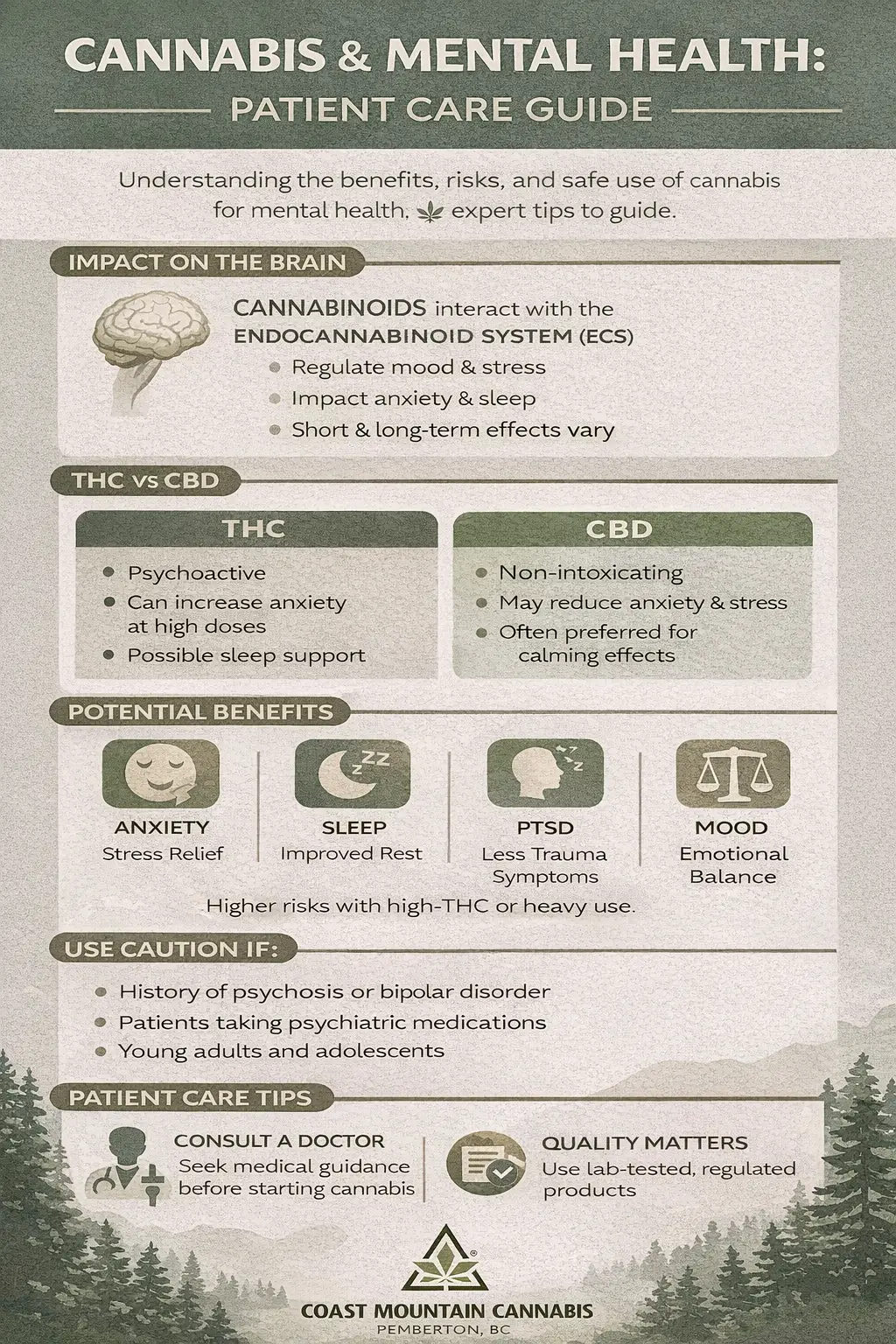
Cannabis affects the brain through the endocannabinoid system (ECS)—a network involved in regulating mood, stress response, sleep, and emotional processing. Because the ECS plays a role in mental health, cannabis can influence psychological states in different ways depending on the person and the product used.
How Cannabinoids Interact with the Brain
Cannabinoids bind to receptors in the brain that influence neurotransmitter release. This interaction can alter perception, mood, and emotional response.
THC vs CBD: Different Effects
- THC (tetrahydrocannabinol): Psychoactive; may produce relaxation or euphoria at low doses but can increase anxiety or paranoia at higher doses.
- CBD (cannabidiol): Non-intoxicating; commonly associated with calming effects and may help regulate stress and anxiety.
Short-Term vs Long-Term Impact
Short-term effects may include relaxation or impaired concentration. Long-term effects depend on frequency, dosage, age of use, and individual mental health history.
Potential Mental Health Benefits of Cannabis
Organic Cannabis is not a primary treatment for mental health conditions, but some patients use it as a supportive option under medical guidance.
Cannabis and Anxiety Management
Low-dose or CBD-dominant products may help some individuals manage situational anxiety or stress. However, responses vary widely.
CBD for Stress and Mood Regulation
CBD is often preferred for daytime use, as it does not cause intoxication and may help reduce stress and nervous tension.
Cannabis and Sleep Improvement
Sleep disturbances are closely linked to mental health. Some individuals use cannabis to help fall asleep or stay asleep, indirectly supporting emotional balance.
PTSD and Trauma-Related Symptoms
Emerging research suggests cannabis may help reduce nightmares and hyperarousal in some people with PTSD, though clinical guidance remains essential.
Risks and Side Effects of Cannabis Use
Cannabis use is not without risks, especially when used improperly or without supervision.
Increased Anxiety and Paranoia
High-THC products can intensify anxiety, panic, or racing thoughts—particularly in new users.
Cannabis-Induced Psychosis
Cannabis may trigger or worsen psychosis in individuals with a personal or family history of schizophrenia or related disorders.
Depression and Motivation
Heavy or frequent use may contribute to low mood or reduced motivation in some individuals.
Dependency and Tolerance
Although less addictive than many substances, cannabis can still lead to problematic use, especially when used to self-manage mental health symptoms.
Who Should Be Cautious with Cannabis Use
Cannabis may not be suitable for everyone.
Higher-Risk Groups Include:
- Individuals with a history of psychosis or bipolar disorder
- Adolescents and young adults, whose brains are still developing
- Patients taking psychiatric medications, due to potential interactions
In these cases, medical consultation is strongly advised.
How Patients Should Navigate Cannabis Care
Consult Healthcare Professionals
Cannabis should never replace prescribed mental health treatment without professional advice.
Choosing the Right Strain and Dosage
- Start with low doses
- Prefer CBD-dominant or balanced products
- Avoid high-THC products if anxiety-prone
Product Quality Matters
Only use lab-tested, regulated products to ensure accurate dosing and safety.
Monitor Symptoms Over Time
Patients should track how cannabis affects mood, anxiety, sleep, and overall mental health and reassess use if symptoms worsen.
Medical Cannabis vs Recreational Use
Key Differences
- Medical cannabis: Guided use, targeted dosing, clinical oversight
- Recreational cannabis: Typically higher THC, less personalized
Why Medical Guidance Matters
For mental health patients, medical supervision helps reduce risks, manage interactions, and ensure cannabis is used responsibly.
Legal and Ethical Considerations
In Canada, medical cannabis is legal and regulated. Patients have the right to explore cannabis as part of care, but responsible use includes:
- Following medical advice
- Understanding personal risk factors
- Avoiding misuse or self-diagnosis
Ethical use prioritizes patient safety and informed decision-making.
Future Research and Evolving Perspectives
Research into cannabis and mental health is ongoing. Future studies aim to:
- Clarify who benefits most
- Establish clearer dosing guidelines
- Better understand long-term effects
As evidence grows, patient care approaches will continue to evolve.
Conclusion
Cannabis and mental health share a nuanced relationship. While some individuals experience symptom relief, others may face increased risks. The key to safe use lies in education, moderation, and medical guidance. For those considering cannabis as part of a mental health care plan, informed decision-making and professional support are essential.
FAQ Section
Q1. Can cannabis help with anxiety and depression?
Cannabis may help some individuals manage anxiety or stress, particularly CBD-dominant products, but it can worsen symptoms for others.
Q2. Is cannabis safe for people with mental health disorders?
Safety depends on the condition, product type, and dosage. Medical consultation is strongly recommended.
Q3. What’s the difference between THC and CBD for mental health?
THC can be psychoactive and anxiety-provoking at high doses, while CBD is non-intoxicating and often preferred for stress support.
Q4. Can cannabis worsen mental health symptoms?
Yes. High-THC or frequent use may increase anxiety, paranoia, or psychosis risk in some individuals.
Q5. How should patients start using cannabis for mental health?
Start low, go slow, choose regulated products, and involve a healthcare professional in decision-making.