Introduction
In cannabis cultivation, the way you shape and train your plants can dramatically influence their yield, structure, and overall health. Two of the most common training techniques, topping and fimming are designed to help growers control plant height, encourage bushier growth, and improve light exposure to lower bud sites. Understanding these methods can help you make informed decisions to get the most out of every grow cycle.
1. Understanding Plant Training
Plant training is a method used to manipulate the shape and structure of cannabis plants to promote even growth and higher yields. By guiding how the plant distributes its energy, growers can create an even canopy that captures more light and produces more flower sites.
Benefits of plant training include:
- Enhanced light penetration for lower buds
- Stronger branches that support bigger flowers
- Improved airflow and reduced risk of mould
- Increased overall yield per plant
2. What is Topping?
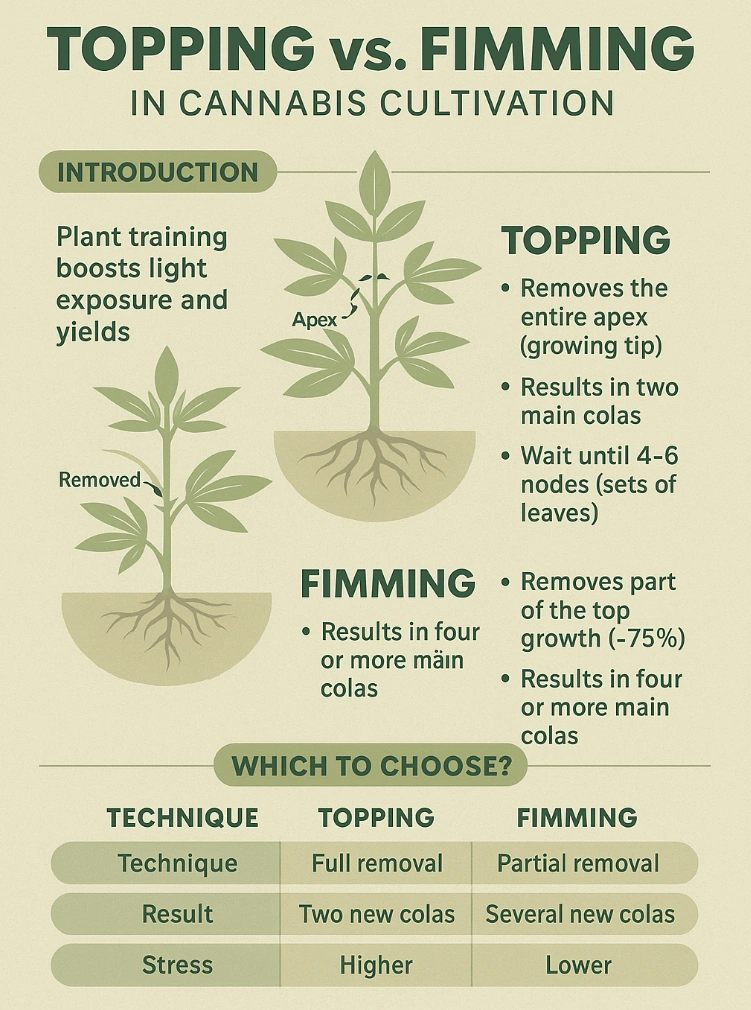
Topping is a high-stress training (HST) technique that involves cutting off the main growing tip (apical meristem) of the cannabis plant. By removing this central growth point, the plant redirects energy to the lower branches, resulting in a bushier structure with multiple main colas rather than a single dominant one.
How to Top a Cannabis Plant – Step-by-Step:
- Wait until your plant has at least four to six nodes.
- Using clean, sharp scissors or pruning shears, cut the main stem just above the fourth or fifth node.
- Allow the plant to recover for several days before further training or adjustments.
Advantages of Topping:
- Increases bud sites and overall yield
- Creates a shorter, more manageable plant
- Encourages even light distribution
Disadvantages of Topping:
- Temporary stress slows growth for a few days
- Incorrect cuts can lead to uneven recovery
- Not ideal for auto-flowering strains with short vegetative periods
3. What is Fimming?
Fimming is a similar but slightly less aggressive technique than topping. Instead of removing the entire growth tip, fimming involves cutting about 75–80% of the top shoot, leaving a small portion intact.
This method encourages the plant to produce three to five new shoots instead of two, resulting in a fuller canopy and even more bud sites.
The Difference Between Topping and Fimming:
- Topping: Removes the entire tip, creating two new main colas.
- Fimming: Removes part of the tip, leading to multiple new colas.
Fimming causes less stress, making it a great option for growers who want to boost yields without significantly delaying growth.
4. Topping vs. Fimming – Which One Should You Choose?
Choosing between topping and fimming depends on your growing goals, plant strain, and setup.
When to Use Each:
- Use topping for photoperiod strains that have time to recover before flowering.
- Use fimming for faster-growing or auto-flowering strains where recovery time is limited.
5. Common Mistakes to Avoid
Even experienced growers can make errors when applying these training techniques. Here are some of the most frequent issues:
- Overtraining: Repeated cuts in a short time can stress the plant and stunt growth.
- Cutting too early: Young plants with fewer than four nodes may not recover properly.
- Dirty tools: Using dull or unsterilised scissors can introduce infections.
- Training during flowering: High-stress techniques should only be performed in the vegetative stage.
6. Pro Tips for Successful Training
To get the best results, consider these expert tips:
- Timing: Perform topping or fimming during early to mid-vegetative growth, never during flowering.
- Tools: Always use sterilised scissors or pruning shears for clean cuts.
- Combine with other methods: Pair topping or fimming with low-stress training (LST) or Screen of Green (SCROG) techniques for optimal canopy control.
- Monitor recovery: Give plants 5–7 days to recover before additional training or pruning.
Conclusion
Both topping and fimming are valuable tools in a grower’s toolkit. While topping helps create a structured, evenly lit plant, fimming encourages fuller canopies with multiple colas. The best choice depends on your strain, environment, and growing style.
For those cultivating organically, as Coast Mountain Cannabis does, these techniques can be combined with healthy soil practices to produce robust, high-yielding plants that express their full potential. With a steady hand, patience, and the right approach, growers can transform their plants into thriving examples of craft cannabis cultivation.