Opioids have long been a cornerstone of pain management in Canada, particularly for patients with severe or persistent pain. However, rising concerns around dependency, tolerance, and overdose have prompted healthcare providers and patients to explore opioid-sparing approaches. For individuals undergoing cancer treatment, pain is often accompanied by nausea, appetite loss, anxiety, and sleep disruption—symptoms that may not be fully addressed by opioids alone.
In this context, medical cannabis for cancer patients has emerged as a complementary option that may help reduce opioid reliance while supporting broader symptom management.
Understanding Opioids and Their Risks
What Opioids Are Commonly Prescribed For
Opioids such as morphine, oxycodone, hydromorphone, and fentanyl are frequently prescribed for:
- Cancer-related pain
- Post-surgical pain
- Advanced or palliative care
Risks of Long-Term Opioid Use
While effective, opioids can cause:
- Physical dependence and tolerance
- Sedation and cognitive impairment
- Constipation and nausea
- Increased overdose risk
For cancer patients, long-term opioid use may significantly affect daily functioning and quality of life.
Canada’s Opioid Crisis
Canada continues to face opioid-related harms, reinforcing the importance of harm-reduction strategies and alternative pain-management tools where appropriate.
What Is Opioid-Sparing Therapy?
Opioid-sparing therapy refers to strategies that reduce opioid dosage or duration by integrating additional treatments that help manage pain and related symptoms.
Why Clinicians Explore Opioid Alternatives
- Lower risk of overdose and dependency
- Improved long-term patient outcomes
- Better management of complex symptom profiles
Cancer Care and Harm Reduction
In oncology, opioid-sparing approaches may include physical therapy, psychological support, non-opioid medications, and medical cannabis, particularly for patients experiencing multiple treatment-related symptoms.
How Cannabis Works for Pain and Symptom Relief
Cannabis interacts with the endocannabinoid system (ECS), which helps regulate pain perception, inflammation, appetite, mood, and sleep.
THC and CBD for Cancer Patients
- THC:
- May help with cancer pain relief
- Commonly used for chemotherapy-related nausea and appetite loss
- Can promote sleep but may cause intoxication
- CBD:
- Non-intoxicating
- May help with inflammation, nerve pain, and anxiety
- Often preferred for daytime symptom management
Many patients benefit from balanced THC:CBD formulations, which may support pain relief while minimizing side effects.
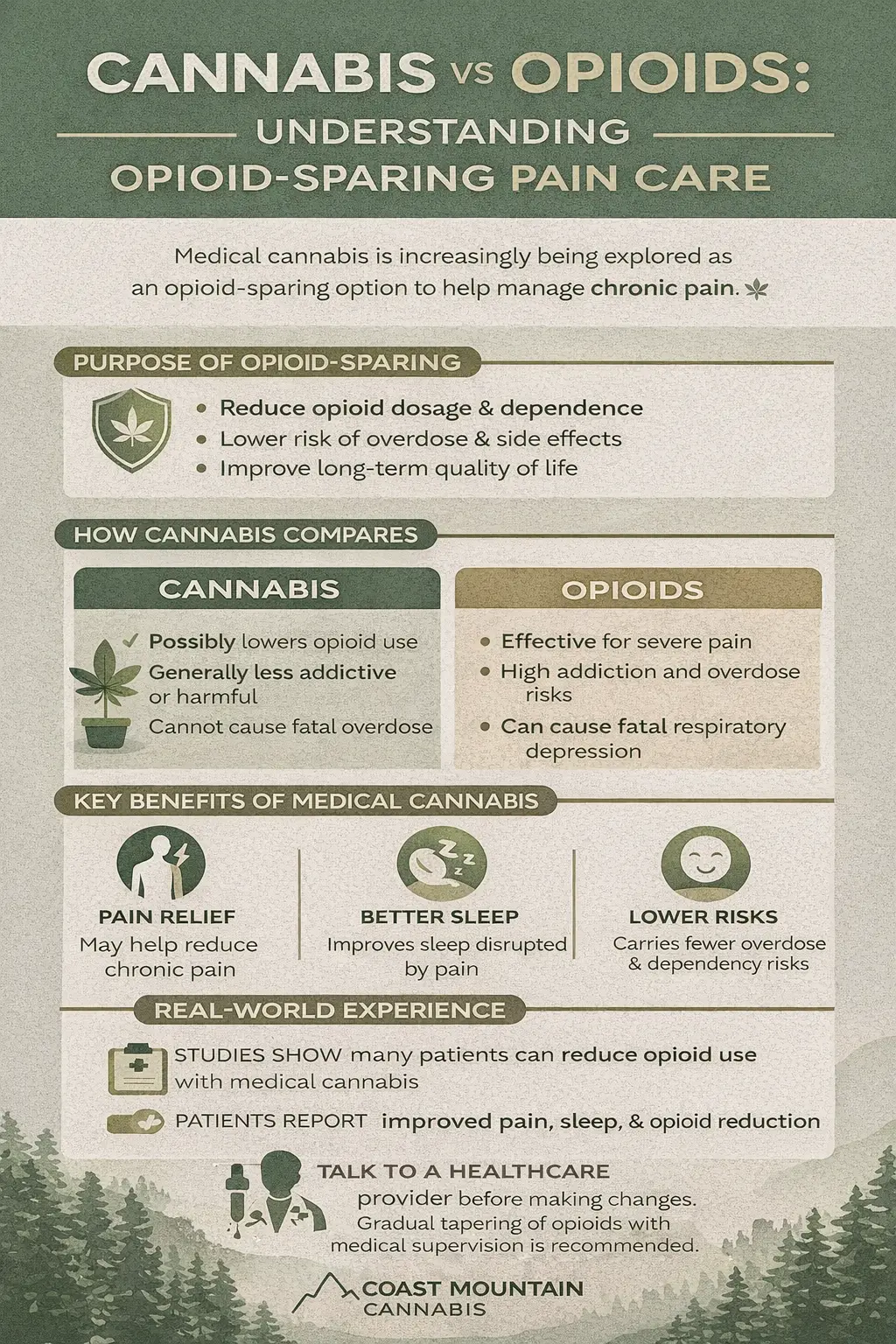
Cannabis vs Opioids: Key Differences
Addiction and Dependency
- Opioids: High risk of physical dependence
- Cannabis: Lower dependency risk, though misuse is possible
Overdose Risk
- Opioids can cause fatal respiratory depression
- Cannabis has no documented lethal overdose threshold
Symptom Coverage
Opioids primarily target pain, while cannabis may help address:
- Pain
- Nausea and vomiting
- Appetite loss
- Anxiety and sleep disruption
Quality of Life
Some cancer patients report improved daily functioning and reduced medication burden when cannabis is incorporated into their care plan.
Evidence from Canadian Patients and Studies
Opioid Reduction and Cannabis Use
Observational studies and patient-reported outcomes in Canada suggest that some patients reduce opioid dosage after initiating medical cannabis, particularly those managing chronic pain or cancer-related pain.
Real-World Use in Cancer Care
Cannabis is most often used alongside opioids, not as a direct replacement, allowing gradual dose reduction under medical supervision.
Legal Status of Medical Cannabis in Canada
Medical cannabis is legal nationwide under federal regulation.
Access Through Healthcare Providers
Cancer patients may:
- Receive medical authorization from a healthcare practitioner
- Register with a licensed medical cannabis provider
- Order lab-tested products directly for home delivery
Medical access provides regulated products, dosing guidance, and continuity of care.
Benefits and Limitations of Cannabis in Cancer-Related Opioid-Sparing Care
Potential Benefits
- Reduced opioid reliance
- Lower overdose risk
- Broader symptom relief (pain, nausea, appetite, sleep)
Limitations and Risks
- Not effective for all pain types
- Psychoactive effects with THC
- Individual response varies
Importance of Medical Supervision
Cancer patients should never alter opioid use without medical guidance. Cannabis should be integrated thoughtfully into a personalized treatment plan.
Role of Healthcare Providers in Opioid-Sparing Strategies
Healthcare professionals play a critical role by:
- Assessing patient suitability
- Monitoring symptom response and medication interactions
- Supporting safe opioid tapering where appropriate
Future Outlook: Cannabis in Cancer Pain Management
As research expands, medical cannabis is increasingly viewed as a supportive tool in oncology-related pain and symptom management. Ongoing studies will continue to refine best practices for opioid-sparing use.
FAQs: Medical Cannabis for Cancer Patients
Where can I buy medical cannabis for cancer patients online?
Medical cannabis can be purchased online through licensed Canadian medical cannabis providers after registration with medical authorization.
Are there delivery services for medical cannabis for cancer patients in Canada?
Yes. Licensed providers offer secure home delivery across most regions of Canada.
Where can I buy medical cannabis for cancer treatment near me?
Medical cannabis is accessed through licensed providers that ship directly to patients’ homes, regardless of location.
How do I get a medical cannabis card for cancer patients in Canada?
A healthcare practitioner must provide medical authorization. Patients then register with a licensed provider to access medical products.
Which medical cannabis strains are recommended for cancer-related nausea?
Strains with moderate THC levels and terpenes such as limonene or myrcene are commonly chosen, though individual response varies.
How do I choose medical cannabis strains effective for cancer-related nausea?
Consider:
- THC tolerance
- Balanced or THC-forward formulations
Terpene profiles associated with nausea relief
Medical guidance can help personalize strain selection.