Chronic pain is one of the most common reasons Canadians explore medical cannabis. For individuals living with long-term conditions such as arthritis, nerve damage, fibromyalgia, or spinal injuries, pain can become a daily barrier to quality of life. As traditional medications don’t always provide lasting relief—or come with difficult side effects—cannabis for chronic pain management in Canada has become an increasingly discussed option among patients and healthcare providers.
Understanding Chronic Pain
Chronic pain is generally defined as pain lasting longer than three months and may continue even after the original injury has healed. Unlike acute pain, chronic pain often requires long-term management strategies, not just short-term medication.
Impact on Quality of Life
Chronic pain can affect:
- Mobility and independence
- Sleep and energy levels
- Mental health, including anxiety and depression
- Ability to work or maintain social connections
This complexity is why many patients seek multimodal pain management, including medical cannabis.
How Cannabis Helps With Chronic Pain
Cannabis interacts with the body through the endocannabinoid system (ECS)—a regulatory network involved in pain signalling, inflammation, mood, and immune response.
THC and Pain Modulation
THC binds primarily to CB1 receptors in the nervous system, which may:
- Reduce pain perception
- Relax muscles
- Improve sleep disrupted by pain
THC-dominant products are often used for moderate to severe pain but may cause psychoactive effects.
CBD for Inflammation and Nerve Pain
CBD works differently, influencing inflammatory pathways and nerve signalling without intoxication. It is commonly used for:
- Inflammatory pain
- Neuropathic pain
- Daytime symptom control
Many patients find that balanced THC:CBD formulations offer effective relief with fewer side effects.
Types of Cannabis Used for Chronic Pain Relief
THC-Dominant Products
Often chosen for:
- Severe or persistent pain
- Night-time pain relief
- Sleep support
CBD-Dominant Products
Frequently used for:
- Inflammatory or nerve-related pain
- Patients sensitive to THC
- Daytime use
Balanced THC:CBD Products
Popular for long-term chronic pain management in Canada, offering:
- Broader symptom relief
- Reduced psychoactivity
- Better functional balance
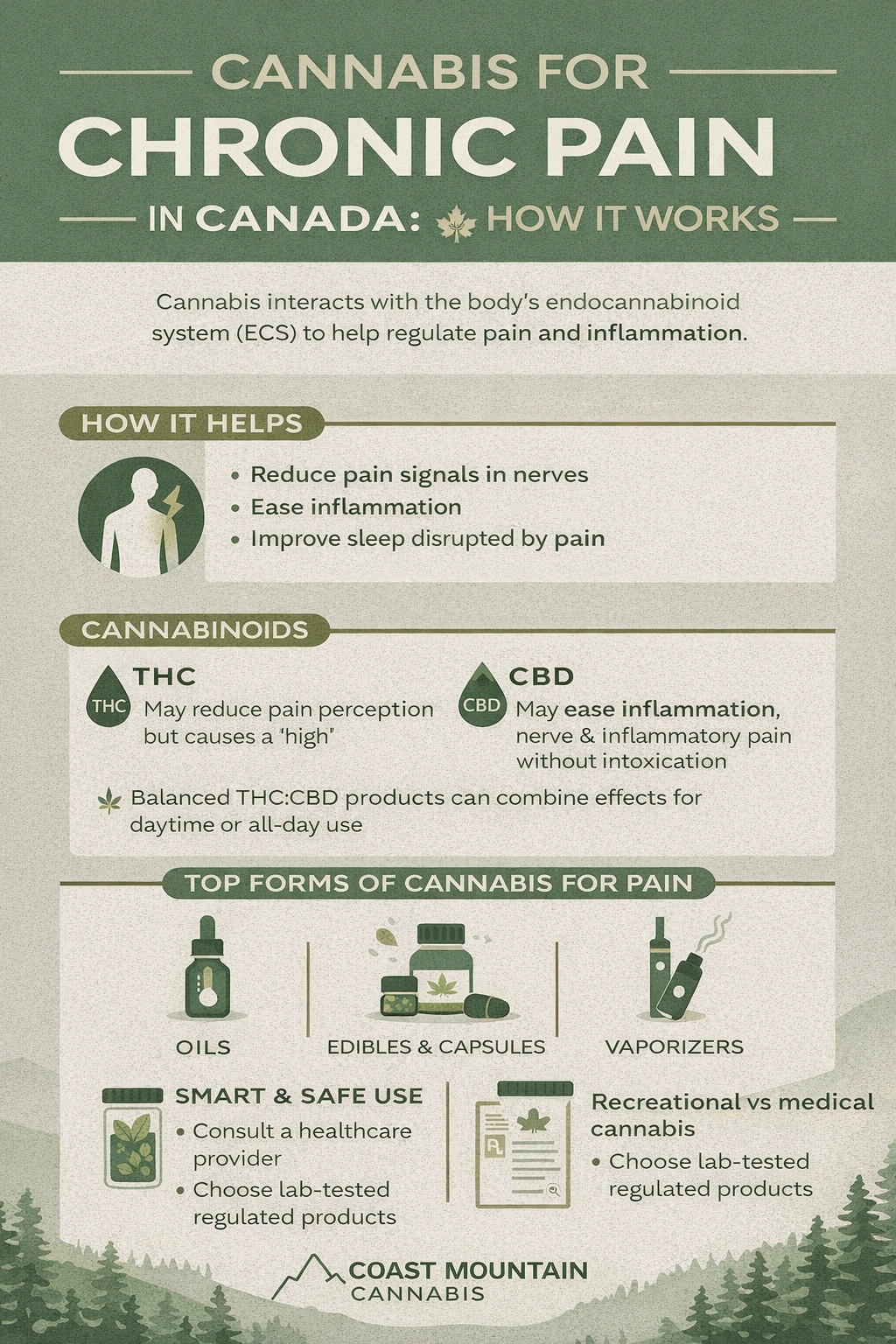
Popular Cannabis Forms for Chronic Pain
Oils and Tinctures
- Precise dosing
- Long-lasting effects
- Suitable for daily use
Edibles and Capsules
- Discreet and convenient
- Slower onset but extended relief
Topicals
- Applied directly to painful areas
- Non-intoxicating
- Useful for joint, muscle, and localized pain
Dried Flower and Vaporizers
- Faster onset
- Useful for breakthrough pain
- Vapourizing reduces combustion risks
Best Cannabis Strains for Chronic Pain (Examples)
While individual response varies, cannabis strains for pain are often selected based on terpene content as much as THC levels.
- Indica-dominant strains: Commonly associated with deep relaxation and sleep support
- Hybrid strains: Provide balanced pain relief with functional clarity
- Terpenes to look for:
- Myrcene (muscle relaxation)
- Caryophyllene (anti-inflammatory)
- Linalool (calming, pain-modulating)
Legal Status of Cannabis for Pain in Canada
In Canada, cannabis is legal for both recreational and medical use.
Medical Cannabis in Canada
Medical access offers:
- Healthcare practitioner involvement
- Access to specific medical formulations
- Potential tax deductions
Patients must register with a licensed medical cannabis provider to ensure product safety, consistency, and lab testing.
Dosage, Safety, and Side Effects
Start Low and Go Slow
Cannabis affects individuals differently. Starting with low doses and adjusting gradually helps reduce side effects.
Potential Side Effects
- Dry mouth
- Drowsiness
- Dizziness
- Anxiety (more common with high THC doses)
Medication Interactions
Cannabis may interact with certain prescriptions, including opioids and antidepressants. Medical guidance is strongly recommended.
Is Cannabis Right for Chronic Pain Management?
Who May Benefit
- Patients with inflammatory or nerve pain
- Individuals seeking opioid-sparing options
- Those with pain-related sleep disruption
When Caution Is Advised
- History of cannabis sensitivity
- Certain mental health conditions
- Pregnancy or breastfeeding
Cannabis should be viewed as one tool within a broader pain management plan, not a standalone cure.
Conclusion
Cannabis has become an important option in chronic pain management in Canada, offering flexibility, multiple delivery methods, and individualized cannabinoid profiles. When used responsibly and under medical guidance, it may help improve comfort, sleep, and daily functioning for many Canadians living with chronic pain.
FAQs: Chronic Pain and Cannabis in Canada
What are the best cannabis strains for chronic pain relief in Canada?
There is no single “best” strain, but indica-dominant and hybrid strains rich in myrcene, caryophyllene, and linalool are commonly chosen for pain relief.
Which cannabis tinctures are effective for chronic pain?
Balanced THC:CBD tinctures are often effective, offering sustained relief with fewer side effects. CBD-dominant tinctures are commonly used for inflammation and nerve pain.
How do you use cannabis topicals for chronic pain relief?
Cannabis topicals are applied directly to the affected area. They do not cause intoxication and are best for localized muscle or joint pain.
What form of cannabis is best for chronic pain?
It depends on the type of pain:
- Oils/tinctures for daily management
- Vaporizers for fast relief
- Topicals for localized pain
Many patients combine formats for comprehensive relief.
What do you do when your chronic pain is unbearable?
Severe pain should always be discussed with a healthcare professional. Some patients use cannabis alongside prescribed treatments, physical therapy, and lifestyle adjustments as part of a multidisciplinary pain strategy.