Introduction
For many veterans, the impact of trauma doesn’t end when service does. Post-Traumatic Stress Disorder (PTSD) continues to affect thousands of former service members across Canada and beyond, often disrupting sleep, mood, and quality of life. While traditional treatments, such as prescription medication and psychotherapy remain the foundation of care, medical cannabis has emerged as a promising supportive option for veterans seeking relief from persistent symptoms.
Understanding PTSD in Veterans
PTSD is a complex mental health condition triggered by exposure to trauma. Among veterans, it often stems from combat experiences, life-threatening events, or prolonged exposure to high-stress environments.
Common symptoms include:
- Recurrent flashbacks or nightmares
- Intense anxiety or hypervigilance
- Emotional numbness and irritability
- Difficulty sleeping or staying asleep
- Depression and loss of interest in daily activities
While therapy and medication can help, not every veteran responds well to traditional treatments. Antidepressants or sleep aids may cause side effects like fatigue, mood swings, or dependency, leaving many searching for natural, effective alternatives.
Medical Cannabis as a Treatment Option
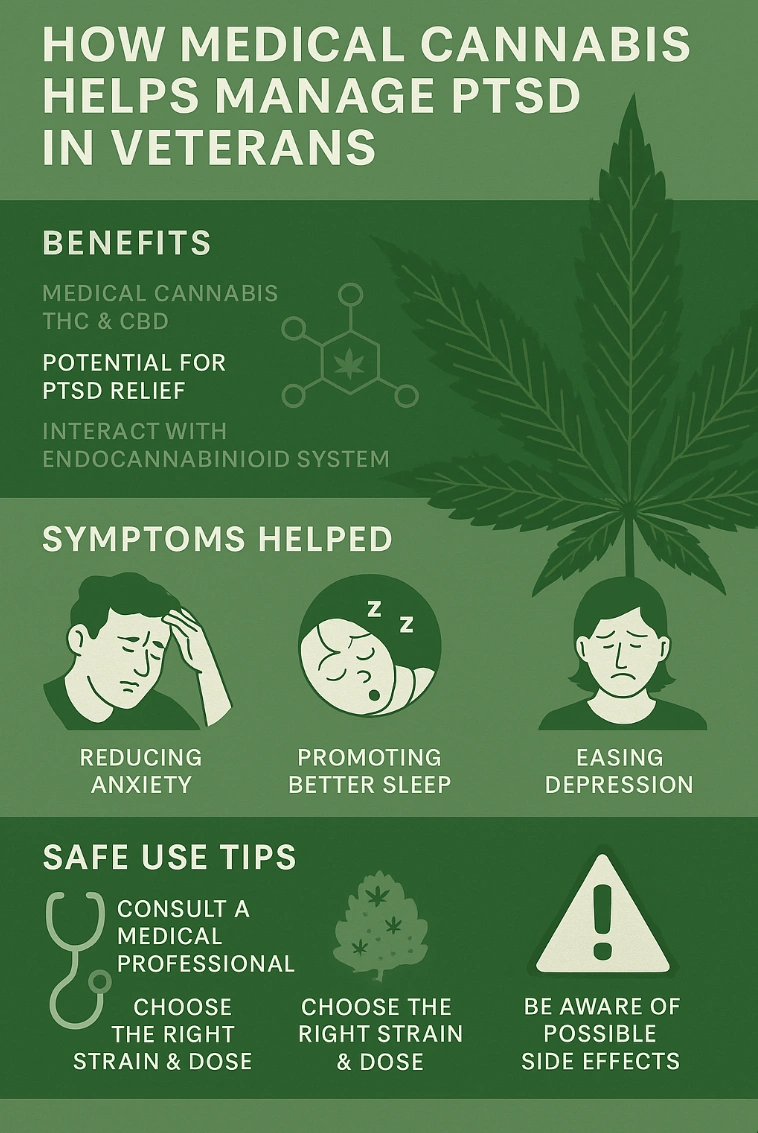
In recent years, medical cannabis has shown potential as a therapeutic ally for veterans managing PTSD. Its benefits come from cannabinoids, naturally occurring compounds such as THC (tetrahydrocannabinol) and CBD (cannabidiol), which interact with the body’s endocannabinoid system. This system plays a key role in regulating mood, memory, sleep, and stress responses.
When used responsibly, medical cannabis can help restore balance to this system, providing relief from several core PTSD symptoms:
1. Reducing Anxiety and Hypervigilance
Cannabinoids can help calm overactive stress responses, easing tension and making it easier for veterans to relax in environments that might otherwise trigger anxiety.
2. Promoting Better Sleep
Cannabis strains high in myrcene or linalool are known for their relaxing properties, helping veterans fall asleep faster and stay asleep longer, without the grogginess often caused by prescription sleep aids.
3. Easing Depression and Emotional Numbing
Some veterans report that cannabis helps them reconnect emotionally and experience greater mood stability, counteracting the flat or detached feelings associated with PTSD.
Read More: Best Soil for Cannabis
Research and Studies on Cannabis for PTSD
Scientific research on cannabis and PTSD treatment is expanding. A growing number of studies highlight the positive effects cannabis can have on symptom reduction and overall well-being.
- A 2021 study published in the Journal of Affective Disorders found that veterans who used medical cannabis reported a significant decrease in PTSD symptom severity, particularly in anxiety and insomnia.
- Research from the Multidisciplinary Association for Psychedelic Studies (MAPS) also indicates that cannabis may support emotional regulation and reduce the intensity of trauma-related memories.
However, researchers note that more controlled, long-term studies are needed to fully understand the relationship between cannabis use and PTSD relief.
Veterans’ Experiences and Testimonials
Many veterans have shared their personal success stories using medical cannabis. For some, it has been a life-changing alternative to pharmaceuticals, offering stability and a sense of control over their symptoms.
Commonly reported improvements include:
- Fewer nightmares and better quality sleep
- Greater ability to manage anxiety in public spaces
- Improved mood and motivation
- Reduced reliance on prescription medications
These personal accounts have also inspired advocacy movements calling for broader access to medical cannabis for veterans through government programs and health agencies.
Read More: Growing Soil vs Hydroponics
Legal and Accessibility Considerations
In Canada, veterans can access medical cannabis with a doctor’s authorization through licensed producers regulated by Health Canada. Many receive partial or full cost coverage through Veterans Affairs Canada (VAC), depending on their condition and prescription.
In the United States, access is more complicated. While cannabis is legal for medical use in many states, Veterans Affairs (VA) clinicians cannot prescribe or provide it directly, creating accessibility barriers for those who rely on VA healthcare.
Advocacy groups continue to push for policy reform to ensure veterans can safely access cannabis as part of their treatment plans without risking benefits or legal repercussions.
Risks and Considerations
While medical cannabis offers substantial potential, it’s not without risks. Veterans should always consult a medical professional before starting treatment.
Possible side effects include:
- Short-term memory impairment
- Drowsiness or slowed reaction time
- Tolerance or dependency with excessive use
Dosage, strain selection, and consumption method (e.g., vapourizing vs. edibles) can greatly influence the outcome. With the right medical guidance, veterans can tailor cannabis use to their needs safely and effectively.
Conclusion
For veterans coping with PTSD, medical cannabis represents a compassionate and evidence-informed alternative to traditional treatments. By targeting anxiety, sleep issues, and mood regulation, it offers a holistic approach to mental health recovery, without the heavy side effects of pharmaceuticals.
While more research and policy progress are needed, the growing number of success stories and clinical studies suggest that cannabis could play a vital role in supporting veterans on their path toward healing, balance, and peace of mind.