Introduction to Medical Cannabis and Cancer Care
Cancer and its treatments can bring a wide range of challenging symptoms that affect both physical comfort and emotional well-being. Pain, nausea, appetite loss, anxiety, and sleep disruption are common during chemotherapy, radiation, and recovery. In Canada, medical cannabis for cancer patients is increasingly used as a supportive therapy to help manage these symptoms alongside conventional cancer care. While cannabis is not a cure for cancer, many patients report meaningful improvements in quality of life when it is used responsibly and under medical guidance.
How Medical Cannabis Works in the Body
Medical cannabis interacts with the body through the endocannabinoid system (ECS), which helps regulate pain, inflammation, appetite, mood, and sleep.
THC and CBD: Key Differences for Cancer Patients
- THC (tetrahydrocannabinol):
- May help with cancer-related pain
- Commonly used for nausea, vomiting, and appetite stimulation
- Can promote sleep but may cause intoxication at higher doses
- CBD (cannabidiol):
- Non-intoxicating
- May help with inflammation, anxiety, and nerve pain
- Often preferred for daytime symptom management
Many patients find that balanced THC and CBD formulations provide symptom relief with fewer side effects.
Benefits of Medical Cannabis for Cancer Patients
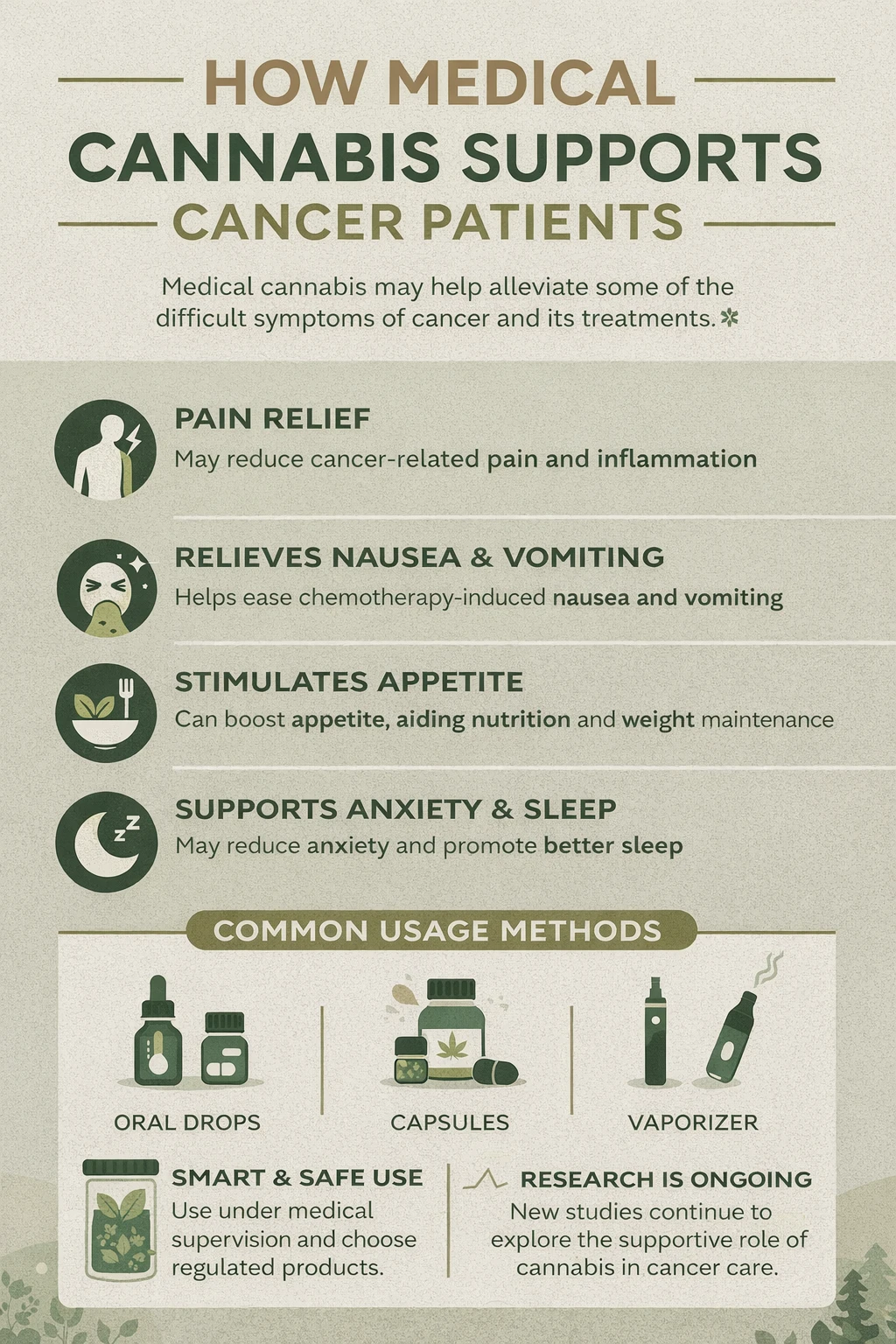
Cannabis for Cancer Pain Relief
Cancer-related pain can result from tumours, nerve damage, or treatment side effects. Cannabis may help reduce pain perception and muscle tension, particularly when traditional pain medications are insufficient or poorly tolerated.
Reducing Chemotherapy-Induced Nausea and Vomiting
THC-containing products are widely used to manage chemotherapy-related nausea and vomiting, helping patients remain hydrated and more comfortable during treatment.
Improving Appetite and Preventing Weight Loss
Loss of appetite is common during cancer care. Cannabis for nausea and appetite loss may help stimulate hunger and support nutritional intake.
Supporting Mental Health and Sleep
Medical cannabis may also help ease anxiety, low mood, and sleep disturbances, which are frequently reported by cancer patients.
Medical Cannabis vs Traditional Cancer Symptom Treatments
Cannabis is often used in addition to, not instead of, standard therapies.
- Compared with opioids, cannabis may offer pain relief with lower overdose risk for some patients
- Compared with anti-nausea medications, cannabis may address multiple symptoms at once (nausea, appetite, anxiety)
Any adjustments to prescribed medications should always be done under medical supervision.
Types of Medical Cannabis Products for Cancer Patients
Oils and Tinctures
- Precise dosing
- Long-lasting effects
- Common choice for daily symptom control
Capsules and Edibles
- Discreet and consistent
- Slower onset but extended relief
Vaporizers
- Faster onset for acute nausea or breakthrough pain
- Vapourizing avoids combustion-related risks
Topicals
- Useful for localized pain
- Non-intoxicating
Choosing the right product depends on symptoms, tolerance, and lifestyle.
Dosage, Safety, and Side Effects
Medical Supervision Is Essential
Cancer patients should consult healthcare providers before starting cannabis, especially during active treatment.
Possible Side Effects
- Drowsiness
- Dry mouth
- Dizziness
- Anxiety (more likely with high THC doses)
Starting with low doses and increasing gradually can help reduce unwanted effects.
Legal Status and Access to Medical Cannabis in Canada
In Canada, medical cannabis is legal under federal regulation. Read more in key provisions and impacts of the cannabis Act.
Accessing Medical Cannabis
Patients can:
- Obtain authorization from a healthcare practitioner
- Register with a licensed medical cannabis provider
- Order products directly for home delivery
Using licensed providers ensures lab-tested products and accurate labelling.
What Research Says About Cannabis and Cancer
Current research supports cannabis primarily for symptom management, including pain, nausea, appetite loss, and anxiety. Clinical trials are ongoing to better understand optimal dosing, long-term safety, and patient outcomes. While evidence continues to evolve, many patients report meaningful symptom relief.
Who Can Benefit the Most from Medical Cannabis
Medical cannabis may be particularly helpful for cancer patients experiencing:
- Persistent pain
- Chemotherapy-related nausea
- Appetite and weight loss
- Sleep disruption or anxiety
Suitability varies, making individualized medical assessment important.
Conclusion
Medical cannabis has become an important supportive option for many cancer patients in Canada. When used responsibly and alongside standard medical care, it may help reduce symptom burden and improve quality of life. Ongoing research and medical guidance continue to shape best practices for its use in cancer care.
FAQs: Medical Cannabis for Cancer Patients
Where can I buy medical cannabis for cancer patients online?
Medical cannabis can be purchased online through licensed medical cannabis providers in Canada after registering with medical authorization.
Are there delivery services for medical cannabis for cancer patients in Canada?
Yes. Licensed providers offer secure home delivery across most regions of Canada.
Where can I buy medical cannabis for cancer treatment near me?
Patients can access medical cannabis through licensed producers that ship directly to their address, regardless of location.
How do I get a medical cannabis card for cancer patients in Canada?
A healthcare practitioner must provide medical authorization. Patients then register with a licensed provider to access medical products.
Which medical cannabis strains are recommended for cancer-related nausea?
Strains with moderate THC and terpenes like limonene or myrcene are commonly chosen, though individual response varies.
How do I choose medical cannabis strains effective for cancer-related nausea?
Focus on:
- THC content appropriate to tolerance
- Balanced or THC-forward formulations
- Terpene profiles associated with nausea relief
Medical guidance can help tailor strain selection.